

Single Word Spells: Meanings, Uses, and Safe Practices
Have you ever felt so emotionally overwhelmed that a long ritual, affirmation, or prayer seemed like too much to hold? In moments like these, a single meaningful word can offer a simple point of focus. Single word spells are brief intention-based practices built around one carefully chosen word, such as “calm,” “clarity,” “release,” or “courage.”
The word is not a command that guarantees change. Instead, it can serve as a symbolic anchor for reflection, emotional grounding, and purposeful action. This guide explains what one-word spells mean, how to choose and use them safely, and when private support such as a personalized cleansing ritual may feel more appropriate.
What Are Single Word Spells?
A single word spell is a focused spiritual practice centered on one word that represents an intention. You might speak the word, write it in a journal, meditate on it, or quietly return to it before taking a practical step.
For example, someone navigating uncertainty might choose “clarity.” A person working through an emotionally draining transition might choose “release.” Someone preparing for a difficult but necessary conversation may work with “courage.”
These words do not have one universal or automatic meaning. Their significance depends on your personal associations, beliefs, circumstances, and choices. In this sense, the word acts less like a magical switch and more like a compact expression of what you want to cultivate within yourself.
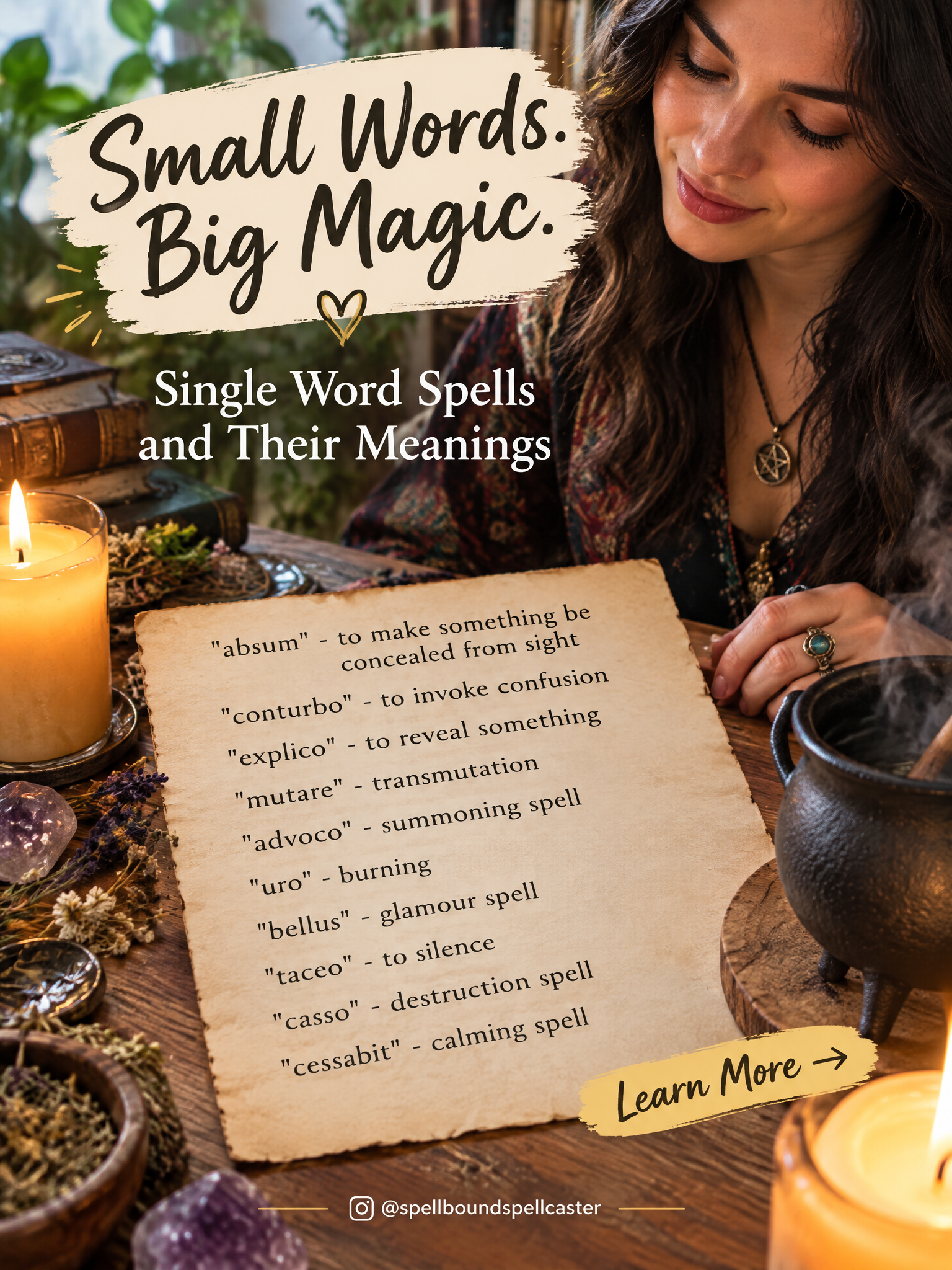
A single chosen word can represent the emotional quality or personal intention you want to carry forward.
Do one-word spells require special language?
No particular language is required. A familiar word often works best because you already understand its emotional meaning. You can use a word from your first language, a spiritual tradition you respectfully belong to, or an ordinary term that expresses your intention clearly.
Be cautious about borrowing sacred words without understanding their cultural or religious context. Simplicity does not remove the need for respect.
Why You May Feel Drawn to a One-Word Practice
People often seek short spiritual practices when their minds feel crowded or their emotions feel difficult to organize. One intentional word can make an abstract desire easier to name without requiring you to deny the complexity of your situation.
You may be drawn to this practice because you want:
- A simple focus during meditation or quiet reflection
- A grounding cue before a challenging conversation
- A symbolic way to mark a fresh beginning
- Support while letting go of an old attachment or pattern
- A reminder of the quality you want to embody
- A private spiritual practice that fits into daily life
The most helpful word is not necessarily dramatic or mysterious. It is usually the one that honestly reflects what you need to practice. If you feel powerless, “choice” may be more supportive than a word aimed at controlling events. If you feel emotionally scattered, “steady” may be more useful than a word centered on another person.
Reflection question: What quality would help you meet your present situation with greater honesty, steadiness, and self-respect?
Meanings of Common Words Used in Simple Spells
There is no fixed dictionary of the best words for spells and intentions. However, the following examples show how common words may be framed in a grounded, ethical way.
Clarity
“Clarity” can symbolize a desire to see a situation more honestly. It does not reveal guaranteed answers or hidden facts. You might use it before journaling, reviewing your options, or asking direct questions.
Calm
“Calm” can remind you to slow down before reacting. It does not mean suppressing valid feelings. Rather, it can create a pause in which you decide how you want to respond.
Release
“Release” may support reflection on what you no longer wish to carry. This can include resentment, an unrealistic expectation, or a habit of repeatedly revisiting the past. Those seeking a more structured symbolic practice may also explore a cord-cutting ritual for personal release.
Courage
“Courage” is not the absence of discomfort. It can represent your willingness to speak honestly, uphold a boundary, ask for help, or make a thoughtful decision. For additional ritual support centered on personal agency, the courage and empowerment service offers a related focus.
Heal
Within spiritual reflection, “heal” can express care, patience, and a desire to move toward emotional wholeness. It should not be treated as a medical or therapeutic promise. Spiritual practice can complement, but should not replace, appropriate professional support.
Protect
“Protect” may symbolize healthy boundaries, wise preparation, and attention to your surroundings. It can be paired with practical decisions such as protecting your privacy, leaving an unsafe setting, or seeking qualified assistance when needed. A private protection-focused ritual service is also available for those who connect with this intention.
How to Use Single Word Spells Safely
A safe practice begins with an intention focused on your own choices, qualities, and well-being. It should not be framed as a way to override another person’s consent, emotions, communication, or decisions.
Try this short intention word ritual:
- Name the situation. Write one or two honest sentences about what is happening and how you feel. Avoid exaggerating or minimizing your experience.
- Choose a self-directed intention. Ask what quality you can cultivate rather than what another person must do.
- Select one clear word. Choose a word you understand and can connect to a realistic action.
- Pause and breathe. Sit comfortably and take several unforced breaths. If quiet reflection feels uncomfortable, keep the exercise brief.
- Speak or write the word. Repeat it slowly a few times, noticing the thoughts and feelings that arise without treating them as predictions.
- Identify one practical step. Connect “clarity” with gathering information, “courage” with setting a boundary, or “release” with putting away an upsetting reminder.
- Close the practice. Thank yourself for taking time to reflect, then continue with your day without repeatedly checking for signs.
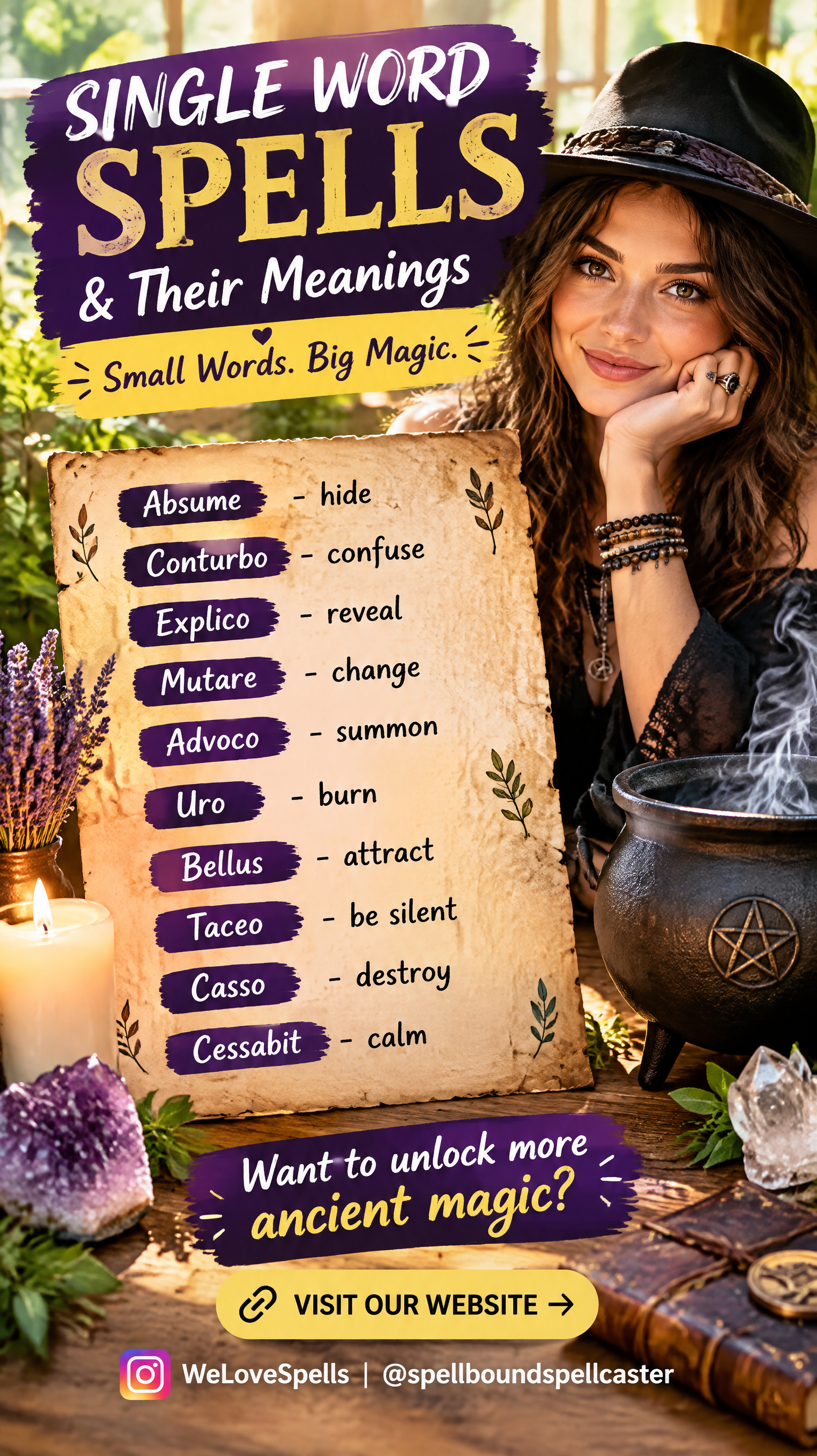
Grounded word practices pair spiritual symbolism with reflection, personal choice, and realistic action.
Can you write the word instead of saying it?
Yes. You can write your word at the top of a journal page, place it somewhere private, or use it as a prompt for reflection. Speaking aloud is optional, especially if privacy, accessibility, or personal comfort makes writing more suitable.
If you would prefer deeper support rather than creating a practice alone, you may gently explore a white light emotional healing ritual. Consider it a spiritual service rather than a guaranteed solution, and choose it only if the intention feels aligned with your needs.
Intention, Symbolism, and Emotional Grounding
Intention gives the word direction. Symbolism gives it personal meaning. Reflection helps you understand why the word matters, while grounding keeps the practice connected to the present rather than to fear or fantasy.
Suppose you choose “peace” during a relationship conflict. The word cannot make another person agree with you or behave differently. It can, however, remind you to communicate respectfully, recognize what is outside your control, and avoid sending messages in the heat of the moment.
Likewise, choosing “truth” does not promise that concealed information will be revealed. It may encourage you to be honest with yourself, ask clear questions, notice inconsistencies, and make decisions based on available evidence.
Do single word spells work?
That depends on what you mean by “work.” If you expect one word to guarantee an external event, determine another person’s feelings, or replace practical effort, that is not a realistic expectation.
If you use the word as a ritual anchor, it may help you organize an intention and remember how you want to act. Spiritual experiences are personal, and results vary. It is wise to remain open without treating every coincidence, dream, or emotional shift as proof of a particular outcome.
Ethics, Consent, and Personal Choice
An ethical one-word practice respects free choice. Words such as “return,” “obey,” or “choose me” can become emotionally risky when they are used with the expectation that another person must respond in a particular way.
A healthier approach redirects the intention toward qualities available to you:
- Replace a demand for contact with “clarity” or “patience.”
- Replace a wish to change someone’s feelings with “acceptance” or “truth.”
- Replace pressure for reconciliation with “communication” or “healing.”
- Replace fixation on a specific outcome with “alignment” or “choice.”
This does not invalidate your longing. It gives that longing a safer container—one that honors your dignity and the autonomy of everyone involved.
Practical Actions That Complement Spiritual Reflection
Ritual can be meaningful, but it is most grounded when paired with ordinary action. Your next step will depend on your situation, yet it should be proportionate, respectful, and within your control.
Helpful complementary actions may include:
- Writing down the facts of a situation separately from your assumptions
- Taking time before responding to an emotionally charged message
- Having a respectful conversation when all involved are willing
- Creating a boundary around repeated or unwanted contact
- Resting, eating regularly, and returning to familiar routines
- Seeking appropriate professional support for medical, emotional, legal, or financial concerns
For relationship concerns, a symbolic service such as a relationship healing ritual should be approached as reflective spiritual support. It cannot substitute for mutual communication, consent, accountability, or practical relationship work.
What to Consider Before Choosing This Support
Before creating a one-word ritual or ordering private ritual support, pause to consider what you are truly asking for. A clear intention can protect you from making a choice based only on a moment of distress.
- Your purpose: Is the intention focused on your growth, clarity, healing, or responsible choices?
- Your expectations: Can you accept that no specific result is guaranteed?
- Consent: Does your intention respect the independence and decisions of other people?
- Your emotional state: Would waiting until you feel steadier help you choose more thoughtfully?
- Practical needs: Is there a real-world conversation, boundary, appointment, or decision that also requires attention?
- Personal resonance: Does the word or service genuinely fit your beliefs, rather than increasing fear or dependence?
You do not need to act urgently. A supportive spiritual choice should leave room for thought, questions, and the possibility of deciding that it is not right for you.
How Private Online Ritual Support Works
We Love Spells provides private online spiritual and ritual services. For a remote ritual service, no physical item is shipped. After ordering, clients provide relevant personal details so the work can be personalized.
Belinda personally performs the ritual work, and clients receive a private update after casting. Spiritual experiences and results vary, and We Love Spells does not guarantee a particular outcome.
Private support may appeal to you if your intention feels too layered for a brief personal word practice or if you simply prefer someone else to perform the ritual. It remains important to choose freely, read the service information carefully, and maintain realistic expectations.
Frequently Asked Questions
What is the best word for a single word spell?
There is no universally best word. Choose a clear, self-directed term that represents a quality you can practice, such as “calm,” “courage,” “clarity,” “release,” or “balance.”
How many times should I repeat the word?
There is no required number. Repeat it only as long as the practice feels focused and comfortable. Repetition should not become a source of pressure or anxiety.
Can I use more than one word?
Yes, although adding many words may dilute the simplicity of the exercise. You might work with one word for a day or journal about several possibilities before selecting the one that feels most relevant.
Can a one-word spell change another person?
It should not be used with the expectation of controlling another person’s emotions, choices, or behavior. Keep the practice centered on your own reflection, communication, boundaries, and actions.
Can I change my chosen word later?
Yes. Intentions can evolve as you gain information or your circumstances change. Choosing a new word does not mean the original practice failed; it may simply reflect greater understanding.
Is a single word spell a replacement for practical help?
No. Spiritual reflection should not replace medical care, mental health support, legal advice, financial guidance, or action needed for your safety. Use appropriate professional resources whenever the situation calls for them.
A Simple Word Can Be a Gentle Beginning
Single word spells can offer a quiet way to name what matters when life feels complicated. Their value lies not in guaranteed outcomes, but in the relationship between intention, symbolism, honest reflection, and the choices you make afterward.
Choose a word that brings you back to your own agency. Let it remind you to pause, listen inwardly, respect consent, and take one grounded step at a time.
If you feel ready for private support around clearing emotional or spiritual heaviness, you can explore the long-distance aura cleansing service. Take your time, keep your expectations realistic, and choose only what feels respectful and aligned for you.