

Release & Let Go Ritual: A Guide for Healing and Moving Forward
Have you been carrying a relationship, memory, disappointment, or unanswered question long after it stopped bringing you peace? Letting go can feel complicated, especially when one part of you understands that a chapter has ended while another part still feels emotionally attached.
A release and let go ritual is a symbolic spiritual practice that can help you acknowledge what you have experienced, clarify what you are ready to release, and turn your attention toward healing and forward movement. This guide explains how release rituals work, what they can realistically offer, and how to approach them with care, patience, and personal choice.
What Is a Release and Let Go Ritual?
In simple terms, a release ritual creates a meaningful moment in which you name what you no longer wish to carry. You might be releasing attachment to a former relationship, lingering resentment, self-blame, an old expectation, or a pattern of repeatedly revisiting the past.
The ritual does not erase your history or force your emotions to disappear. Instead, it gives your intention a clear structure. For some people, that symbolic act makes an internal decision feel more tangible.
Release can take different forms. A private reflection practice may be enough, while someone dealing with a particularly persistent emotional bond may feel drawn to dedicated support such as a cord-cutting ritual service. Neither choice should be treated as a shortcut around your own judgment, boundaries, or practical needs.
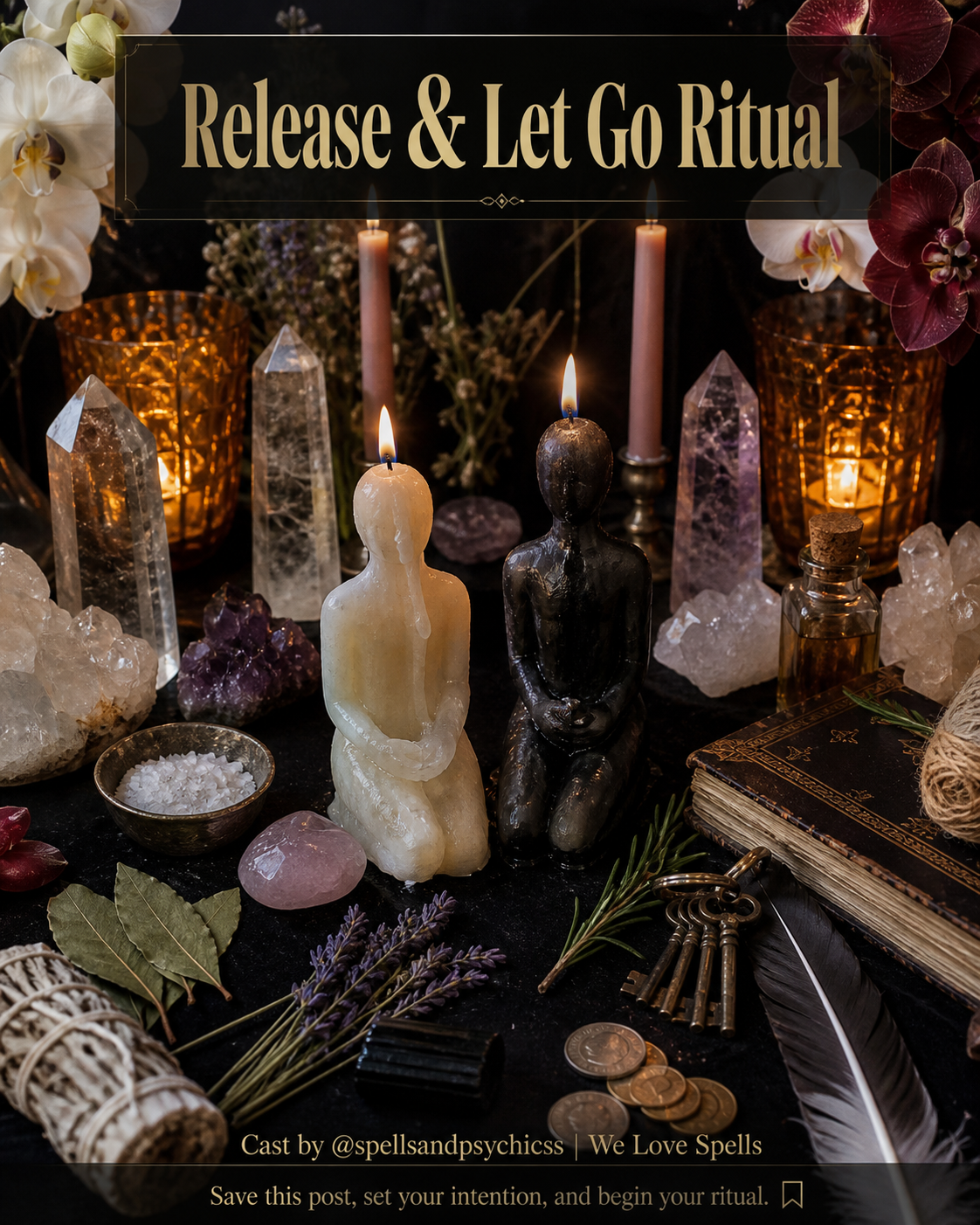
A release ritual represents the conscious choice to honor the past without allowing it to define every step forward.
Why You May Feel Drawn to a Letting Go Practice
People often seek a spiritual ritual when ordinary reflection feels unfinished. You may know intellectually that you need to move forward, yet still find yourself replaying conversations, imagining different outcomes, or feeling emotionally tied to what happened.
You might feel drawn to a ritual if you are:
- Adjusting to the end of a relationship or friendship
- Trying to release guilt, regret, anger, or disappointment
- Finding it difficult to maintain a period of no contact
- Stepping away from an unhealthy dynamic
- Closing a chapter connected to work, home, or identity
- Preparing to welcome a new beginning without denying the past
Wanting closure does not mean that you are weak or unable to cope. It often means that something mattered deeply. A ritual can provide a compassionate boundary between remembering an experience and remaining governed by it.
Can a ritual help you let go of a person?
A ritual may support your intention to loosen an emotional attachment, but it cannot make every feeling vanish on command. Letting go is often gradual. It may involve grieving what was real, accepting what was unavailable, and choosing not to keep feeding an attachment through repeated checking, contact, or fantasy.
If your focus is specifically on releasing an intense relational bond, you may wish to compare a general release practice with soul-tie release support. The most appropriate path is the one that respects your autonomy and helps you return attention to your own life.
How Intention and Symbolism Support Release
Intention is the inner decision that gives a ritual meaning. Rather than focusing on controlling another person or changing the past, a grounded intention centers on what belongs to you: your attention, choices, boundaries, and willingness to move forward.
You could phrase your intention in a way such as:
I honor what this experience taught me. I release the need to keep reliving it, and I give myself permission to move forward at a pace that feels honest.
Symbolism helps express that decision without requiring you to have every answer. Writing down a burden and tearing the paper, placing a meaningful object out of sight, changing your surroundings, or taking a cleansing shower can mark transition. The object or action is not a guarantee of change; its value comes from the meaning you consciously give it.
What is the difference between release and emotional avoidance?
Release acknowledges that something affected you. Avoidance asks you to pretend that it did not.
A healthy letting-go practice makes room for sadness, anger, uncertainty, and relief without treating any one emotion as permanent. You do not need to rush toward forgiveness, deny legitimate concerns, or reconnect with someone to prove that you have healed.
A Gentle Release and Let Go Ritual You Can Do at Home
This reflection exercise is intentionally simple and does not require special materials. Choose a quiet place where you are unlikely to be interrupted. If strong emotions arise, pause, orient yourself to your surroundings, and return only when you feel ready.
- Settle into the present. Place both feet on the floor and take several natural breaths. Notice a few things you can see, hear, and physically feel.
- Name what you are carrying. Write one honest sentence beginning with, “I am ready to stop carrying…” Focus on your experience rather than another person’s behavior.
- Acknowledge what mattered. Write what the situation represented to you. It may have represented belonging, hope, security, recognition, or a future you imagined.
- Choose what remains yours. List any wisdom, strength, values, or clearer boundaries you want to keep. Releasing an experience does not require discarding everything you learned.
- Create a symbolic ending. Fold the paper and put it away, tear it into pieces, or recycle it. Choose an action that feels safe and respectful.
- State a forward-looking intention. Name one quality you want to cultivate, such as peace, steadiness, self-respect, openness, or courage.
- Take one practical step. Silence a notification, move a reminder, tidy your room, contact a trusted person, or schedule an activity that reconnects you with daily life.
Afterward, drink water, eat something nourishing if needed, and avoid judging whether you performed the practice “correctly.” A ritual can be meaningful even when your emotions remain mixed.
What are you truly ready to release?
Consider this question slowly: If you could keep the lesson but put down the emotional burden, what would you no longer need to carry?
Your answer might reveal that you are not releasing a person alone. You may be releasing the need for an apology, a particular ending, or certainty about why events unfolded as they did.
Emotional Grounding and Realistic Expectations
A release ritual is best understood as one supportive moment within a broader process. You may feel lighter afterward, or you may feel tired, reflective, relieved, tearful, or unchanged. None of these responses proves that the ritual did or did not “work.”
Emotions can return when you encounter reminders, anniversaries, shared places, or unexpected contact. This does not necessarily mean that you have lost your progress. Moving forward is rarely a perfectly straight line.
If you want spiritual support centered on your own emotional steadiness, you can gently explore the White Light Emotional Healing service. Another option for those navigating distance or no contact is the emotional detachment and no-contact strength service. Explore only if either approach aligns with your values and current needs.
How long does it take to feel ready to move forward?
There is no universal timeline. The significance of the bond, the nature of the ending, your current support, and ongoing contact can all shape the process.
Rather than waiting for a day when you feel nothing, look for quieter signs of change. You may check less often, think more clearly, protect your time more consistently, or begin imagining a future that is not organized around the past.
Practical Actions That Complement Spiritual Reflection
Spiritual practices are often most grounding when paired with ordinary, concrete choices. These actions do not invalidate the ritual; they give your intention somewhere to live in daily life.
- Reduce exposure to messages, profiles, photographs, or objects that restart an unwanted cycle.
- Write down the boundary you want to maintain and why it matters.
- Restore basic routines involving sleep, meals, movement, and time outdoors.
- Reconnect with people and activities that support your sense of identity.
- Give yourself permission to decline conversations that leave you destabilized.
- Seek appropriate professional support when a situation feels overwhelming or affects your safety or daily functioning.
A broader sense of renewal may also include refreshing the atmosphere around you. If that symbolism feels relevant, you can consider a private cleansing ritual as a separate form of spiritual support.
Ethics, Boundaries, and Personal Choice
A responsible release practice focuses on your own healing rather than attempting to control someone else’s feelings, choices, or behavior. It should never require you to surrender your judgment or ignore circumstances that call for firm boundaries.
You are also free to decide that a ritual is not right for you. Spiritual support is personal, and no one should use fear, pressure, or promises to persuade you. Your beliefs may evolve, and you can combine symbolic reflection with practical support in whatever way feels respectful and grounded.
Letting go does not require reconciliation. It does not mean excusing harmful conduct, forgetting what happened, or making yourself available to someone again. Sometimes release simply means choosing to stop giving an old situation unrestricted access to your present.
What to Consider Before Choosing This Support
Before ordering a private ritual service, pause and clarify what you want the support to represent. A clear, self-directed intention can help you choose without acting solely from a painful moment.
- Your intention: Are you seeking peace, emotional distance, clarity, closure, or a symbolic new beginning?
- Your expectations: Are you able to approach spiritual work without expecting a guaranteed outcome?
- Your boundaries: What practical action will support the intention after the ritual?
- Your readiness: Does release feel like your choice, rather than something another person is pressuring you to do?
- The type of support: Would cord cutting, soul-tie release, emotional healing, or a general cleansing practice best reflect your focus?
If your concern involves creating distance from an ongoing unhealthy influence, the Remove Toxic People ritual service offers another option to review. Keep the emphasis on your boundaries, well-being, and freedom of choice rather than punishment or control.
How Private Online Ritual Support Works
We Love Spells provides private online spiritual and ritual services. When you order a remote ritual service, no physical item is shipped. Instead, you provide relevant personal details after ordering so the work can be personalized.
Belinda personally performs the ritual work, and you receive a private update after casting. This format allows the work to remain private while giving you a clear point of reflection around your intention.
Spiritual experiences and results vary, and We Love Spells does not guarantee a particular outcome. A private ritual should be viewed as spiritual support rather than a promise that emotions, circumstances, or another person will change in a specific way.
Frequently Asked Questions
Do I need special tools for a release and let go ritual?
No. A personal ritual can be as simple as written reflection, a spoken intention, and a symbolic action. What matters most is that the practice feels safe, deliberate, and meaningful to you.
Can I perform a letting-go ritual more than once?
Yes. You may revisit the practice as your understanding changes. Repeating it should support reflection rather than become something you feel compelled to perform perfectly.
Does letting go mean I have to forgive?
No. Forgiveness is personal and should not be forced. You can release an attachment, create distance, and protect your peace without excusing behavior or renewing contact.
What if I still miss the person after the ritual?
Missing someone is compatible with moving forward. A ritual does not erase affection or memory; it can help you decide how much influence those feelings will have over your present choices.
Is a remote ritual a physical product?
No. Remote rituals from We Love Spells are performed privately, and no physical item is shipped. Relevant personal details are provided after ordering for personalization, followed by a private update after casting.
Which ritual is most relevant for releasing a past bond?
That depends on your intention. Cord cutting may resonate with severing an unwanted emotional connection, while soul-tie release may suit a bond that feels enduring. Emotional healing or cleansing support may feel more appropriate if your focus is broader renewal.
Moving Forward Without Rushing Yourself
A release and let go ritual is not about denying love, grief, anger, or disappointment. It is a conscious way to honor what happened while creating more room for the person you are becoming.
Be patient with the parts of you that still remember. Pair spiritual reflection with boundaries, supportive relationships, and small daily decisions that return your energy to the present. Progress can be quiet and still be meaningful.
When you feel ready to mark the end of an emotional bond, you are welcome to explore the private cord-cutting ritual. Choose support only when it feels aligned with your values, expectations, and personal path forward.