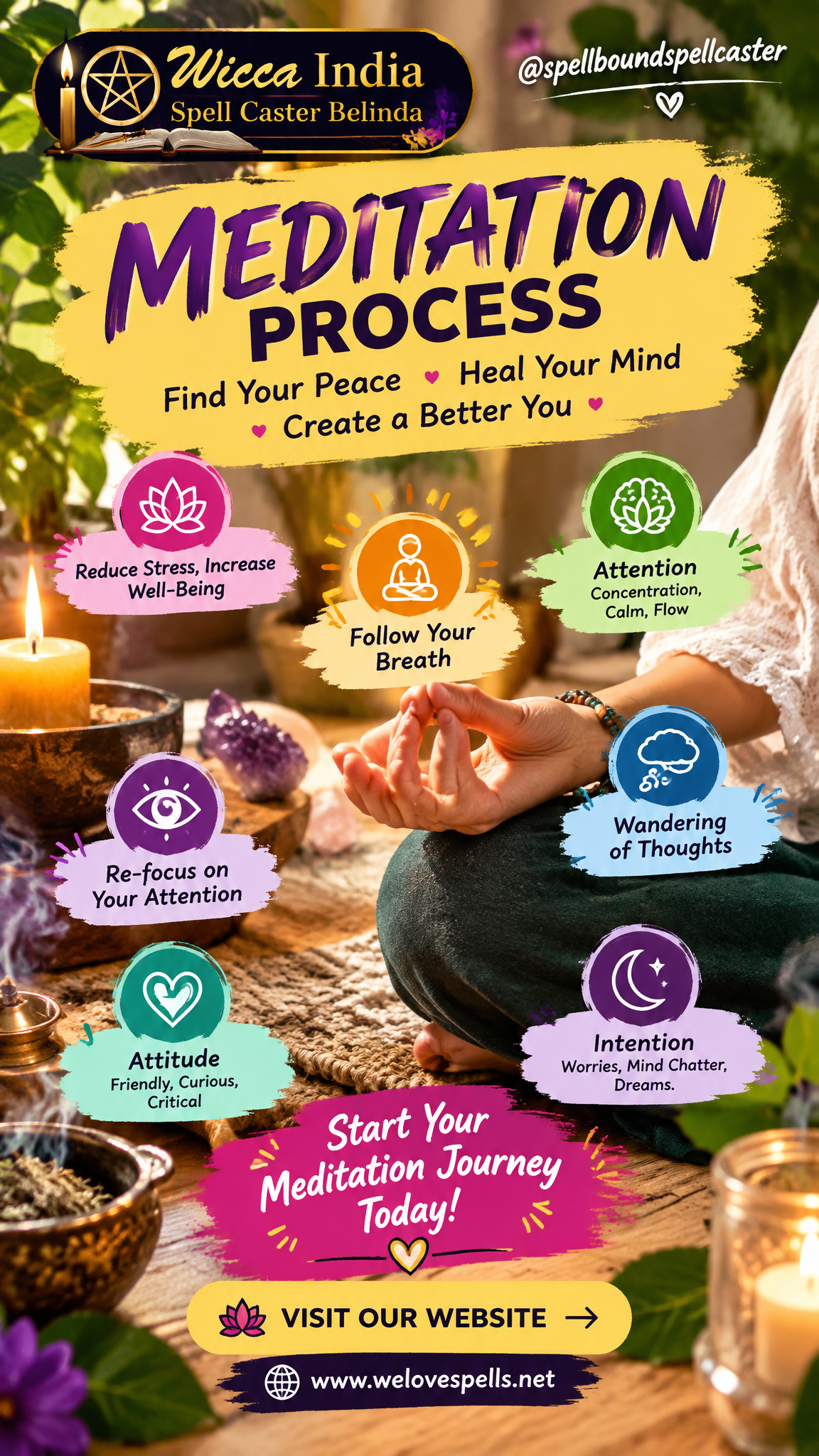
Meditation Process: A Simple Guide to Inner Peace
When life feels noisy, uncertain, or emotionally heavy, even a few quiet minutes can feel out of reach. The meditation process is not about forcing your mind to become perfectly blank; it is a gentle practice of returning to yourself with patience.
Whether you are seeking calm after a difficult day, clearer perspective in a relationship, or a more grounded spiritual routine, meditation can create space to notice what you feel without being ruled by it. This guide explains how meditation works, how to begin simply, and how reflective spiritual support can complement your personal practice.
Inner peace is rarely a single destination. It is often built through small, repeated choices to breathe, pause, listen inwardly, and take caring action in everyday life.
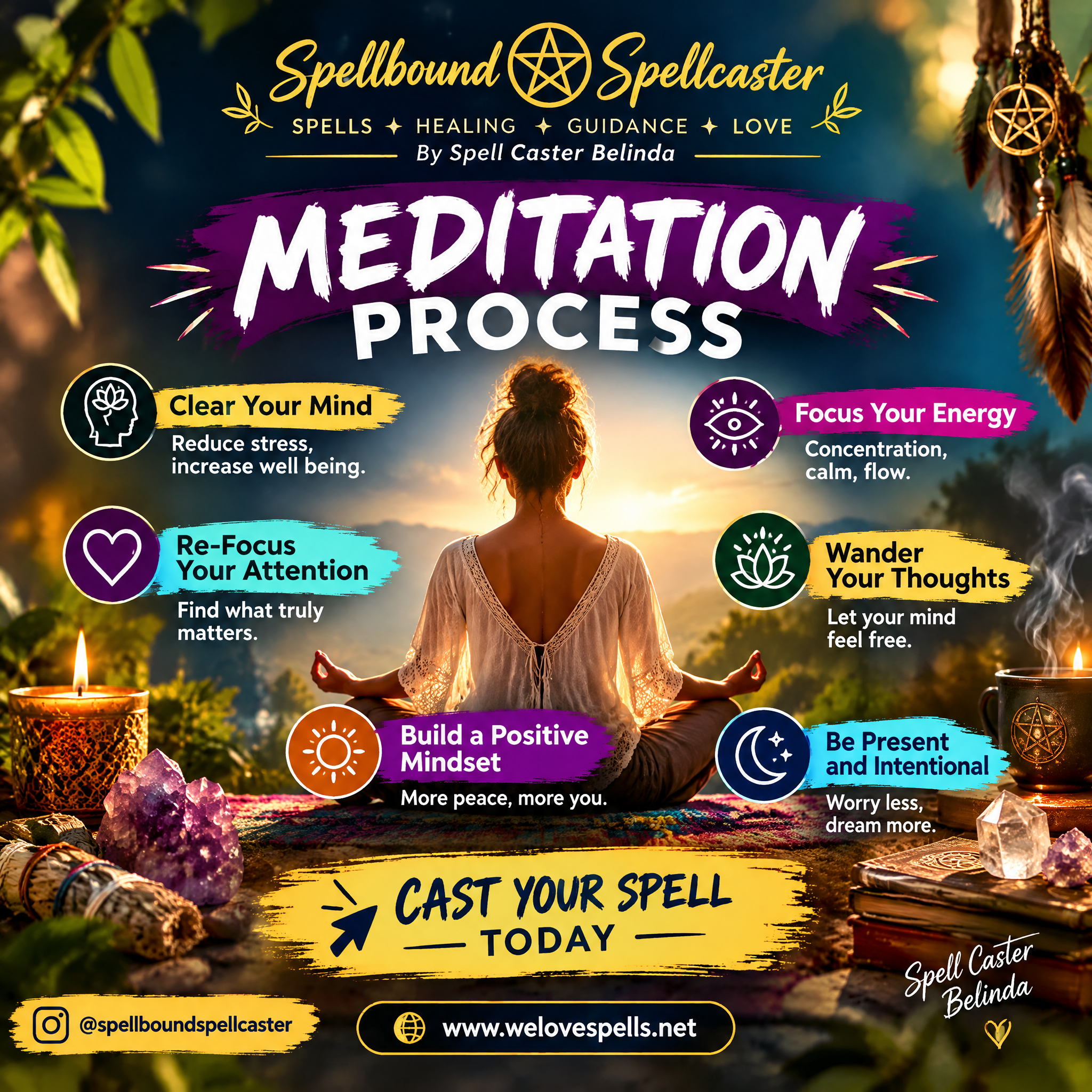
A ritual-inspired reminder to pause, reflect, and reconnect with your inner peace.
What Is the Meditation Process?
The meditation process is a mindful practice of directing your attention with awareness. Rather than trying to eliminate every thought, you learn to observe thoughts, emotions, sensations, and memories without immediately reacting to them.
Many people search for a simple meditation process because they want relief from mental clutter, emotional overwhelm, indecision, or the feeling of being disconnected from themselves. They may also be looking for a spiritual practice that feels private, practical, and possible to maintain.
At its most basic, meditation involves three things: a place to pause, an anchor for your attention, and a willingness to return when your mind wanders. Your anchor may be your breath, a repeated word, a candle flame, a body sensation, a prayer, or a peaceful visual image.
A beginner meditation process does not require perfection
It is completely normal for the mind to wander. A busy mind does not mean you are doing meditation incorrectly; it simply means you are human. Each time you notice that you have drifted and gently come back to your breath or chosen focus, you are practicing the core skill.
Try to replace self-criticism with curiosity. You may quietly say, “Thinking,” “Feeling,” or “Planning,” then return to the present moment. This creates a softer relationship with your inner world over time.
Why Meditation for Inner Peace Feels So Meaningful
Inner peace is not the absence of all conflict, grief, desire, or uncertainty. It is the ability to meet life with a steadier center, even when you do not yet have every answer.
A regular meditation practice may help you create a pause between an emotion and a reaction. In that pause, you may find room to communicate more honestly, make more thoughtful decisions, honor your boundaries, or recognize what you truly need.
For spiritual people, meditation can also become a personal ritual of connection. It may be a time to set an intention, offer gratitude, release emotional tension, or listen for the wisdom that is often harder to hear when life is moving quickly.
The spiritual intention behind a calming ritual
A ritual for peace is not about controlling another person, forcing an outcome, or escaping necessary real-world responsibilities. Its intention is to support your own clarity, emotional balance, self-respect, and openness to healthier choices.
You might set an intention such as:
- “I welcome calm and clarity into my day.”
- “I release what I cannot control and focus on what I can.”
- “I make room for honest communication and compassionate boundaries.”
- “I return to my own center with patience.”
- “I welcome emotional healing in a way that respects my wellbeing.”
An intention works best when it is clear but not rigid. It guides your attention without demanding a guaranteed result from life, other people, or the spiritual process.
How Intention, Clarity, Reflection, and Grounded Action Work Together
Meditation can be more powerful when it is connected to your real life. A peaceful moment on a cushion is valuable, but its deeper purpose is often revealed in how you speak, choose, rest, and care for yourself afterward.
Think of your practice as four connected parts: intention, clarity, reflection, and grounded action. Each part supports the others.
1. Set an honest intention
Begin by asking what you are truly seeking beneath the surface. For example, if you feel preoccupied with a relationship, your deeper need may be reassurance, self-worth, communication, closure, or emotional safety.
When the intention is honest, it becomes easier to choose a meditation focus and spiritual support that feels aligned. Try to phrase your intention around your own growth and wellbeing rather than another person’s behavior.
2. Create clarity through stillness
Stillness does not always bring an instant answer, but it can help you separate immediate emotional noise from your deeper values. You may notice the difference between what you fear, what you hope, and what you know you need.
After meditating, write down one sentence about what feels most important. Keep it simple. Clarity often arrives in small, practical realizations rather than dramatic signs.
3. Reflect without judging yourself
Reflection means making space for your feelings without turning them into a verdict about who you are. You can acknowledge sadness, longing, anger, or confusion while still treating yourself kindly.
A useful question is: “What is this feeling asking me to understand?” You may not have an immediate response, and that is okay. The purpose is to listen rather than rush yourself.
4. Take grounded action
Spiritual work is most supportive when paired with responsible action. This could mean having a respectful conversation, taking a walk, limiting contact that leaves you distressed, keeping an appointment, resting properly, or seeking qualified professional support when needed.
Meditation and ritual can be meaningful forms of personal support, but they are not substitutes for medical care, mental-health treatment, legal advice, or help in an unsafe situation. If you are struggling with persistent distress, reach out to an appropriate licensed professional or local support resource.
A Simple Meditation Process for Beginners
You do not need special equipment, a long schedule, or a silent home to begin. Start with five minutes and allow your practice to be imperfect, personal, and consistent.
- Choose a gentle setting. Sit comfortably in a chair, on a cushion, or anywhere you can remain reasonably at ease. If possible, silence notifications for a few minutes.
- Set a realistic time. Begin with five to ten minutes. A short daily meditation is often easier to sustain than an ambitious practice you feel pressured to complete.
- Ground your body. Notice your feet on the floor, your hands resting, and the support beneath you. Let your shoulders soften without forcing them.
- Follow your natural breath. Notice the inhale and exhale as they are. There is no need to breathe dramatically or control the rhythm.
- Use a simple phrase if helpful. On the inhale, silently say “peace.” On the exhale, say “release.” You may also use “here” and “now.”
- Return when distracted. When thoughts appear, acknowledge them and bring attention back to your breath. Repeat this as often as necessary.
- Close with one grounded choice. Before standing up, ask yourself what one kind, practical action you can take today. Let that be the bridge from meditation into life.
If sitting quietly feels uncomfortable, walking meditation may be a better fit. Walk slowly and notice the rhythm of your steps, the feeling of the ground, and the sounds around you. The goal is awareness, not a particular posture.
What a Professionally Guided Ritual Experience Can Involve
Some people choose a private ritual when they want focused spiritual support around emotional healing, calming energy, self-love, or a transition they are processing. A guided ritual can complement meditation by creating a dedicated container for an intention that matters deeply to you.
At We Love Spells, spiritual services are approached as personal, private work. The purpose is to support reflection, emotional grounding, and intention-setting while respecting the complexity of each person’s circumstances.
For someone seeking a gentler spiritual focus around release and emotional balance, a White Light Emotional Healing Spell may feel aligned with an intention of peace, self-care, and inner renewal. As with all spiritual experiences, individual experiences and results vary by person and situation.
How Belinda prepares private ritual services
Belinda personally prepares each private ritual service for the client’s individual intention. This individualized approach allows the work to remain focused, respectful, and tailored to the information a client chooses to share.
Client information is handled with care and confidentiality. The ritual is prepared remotely, meaning there is generally no physical product shipped unless the selected product page explicitly states otherwise.
A private ritual should be viewed as spiritual support, not as a promise of a specific event, feeling, or timeline. It can be a meaningful complement to your own meditation, reflection, communication, and personal choices.
What to Expect After Ordering a Remote Ritual
After ordering, clients provide the requested details for their personal intention. It is helpful to be clear, honest, and concise, focusing on what you wish to invite, release, strengthen, or understand within your own life.
Belinda then prepares the ritual remotely for that intention. After the work is completed, clients receive a private update. Where applicable, photos or short video updates may be included, depending on the nature of the service.
For a clearer overview of submitting your details and the general ordering process, review the We Love Spells ordering guide. Reading the product description carefully is also important, particularly regarding what is included and whether any physical item is mentioned.
Practical Ways to Support Inner Peace Alongside Spiritual Work
The most supportive meditation practice is one that fits into your actual life. Choose actions that bring you back into your body, your values, and your immediate responsibilities.
- Keep a brief journal after meditation, recording thoughts without trying to solve everything at once.
- Create a calming transition at the end of the day by dimming screens, stretching, or taking several slow breaths.
- Protect your attention by limiting doom-scrolling, arguments, or content that leaves you emotionally depleted.
- Spend time outdoors or near a window, noticing light, weather, and the rhythm of the natural world.
- Practice one clear boundary that supports your peace, such as delaying a difficult reply until you feel calmer.
- Talk with a trusted person or qualified professional when emotions feel too heavy to carry alone.
Small actions matter. The goal is not to become detached from life, but to become more present within it.
Common Misconceptions About Meditation and Rituals for Peace
“Meditation means having no thoughts.”
No. Thoughts are a natural part of being alive. Meditation is the practice of noticing thoughts without needing to chase every one of them.
“I need to meditate for an hour for it to count.”
A few intentional minutes can be worthwhile. Consistency and self-compassion are often more helpful than intensity.
“A ritual replaces my own effort.”
Ritual can support intention and reflection, but grounded decisions remain important. Healthy routines, communication, boundaries, and appropriate professional care all have their place.
“Spiritual work guarantees a certain outcome.”
No ethical spiritual practice can guarantee outcomes or control another person’s choices. Experiences may feel subtle, emotional, reflective, or personally meaningful in different ways for different people.
Frequently Asked Questions About the Meditation Process
How long should beginners meditate for inner peace?
Five to ten minutes is a practical starting point. If that feels difficult, begin with two minutes and build gradually. A sustainable routine is more valuable than forcing yourself into a long session.
What should I think about while meditating?
You do not need to think about anything specific. You can focus on breathing, body sensations, a calming phrase, or a simple intention. When thoughts come, notice them and gently return to your focus.
Can meditation help when I feel emotionally overwhelmed?
Meditation may offer a calming pause and help you observe emotions with more space. However, if you feel persistently overwhelmed, unsafe, or unable to cope, seek support from a qualified mental-health professional or an appropriate local service.
Can I combine meditation with a private spiritual ritual?
Yes. Many people use meditation to clarify their intention before a ritual and to remain grounded afterward. Keep the focus on your own wellbeing, growth, and responsible actions rather than trying to force external outcomes.
Will I receive something in the mail after ordering a ritual?
Private rituals are generally prepared remotely, and no physical product is shipped unless the individual product page specifically says otherwise. Clients receive a private update after the work is completed, with photos or a short video where applicable.
Make Space for Your Own Inner Peace
The meditation process begins with one simple choice: to meet yourself where you are. You do not have to feel perfectly calm before you begin. You only need a few quiet moments and the willingness to return to your breath, your body, and your deeper intention.
Let your practice be gentle. With reflection, clarity, grounded action, and compassionate support, meditation can become a steady ritual of inner peace rather than another demand on your time.
If this ritual feels aligned with what you are seeking, you can explore the private service and learn what to expect.