

Love Commitment Ritual: A Guide to Intentions and Communication
Are you longing for greater certainty about where your relationship is going, yet unsure how to begin the conversation? Wanting commitment can bring hope, tenderness, and vulnerability all at once. A love commitment ritual can offer a symbolic space to clarify what you desire, reflect on the health of your connection, and prepare for honest communication.
This guide explains what commitment-focused ritual work means, why you may feel drawn to it, and how spiritual reflection can complement practical relationship choices. It also explores ethical boundaries and realistic expectations, helping you decide whether private support such as a marriage and commitment ritual service feels appropriate for your situation.
Love Commitment Ritual: The Simple Answer
A love commitment ritual is a spiritual practice centered on intentions such as mutual devotion, emotional security, honest communication, and a shared future. It may help you focus your thoughts and bring greater awareness to what commitment means to you.
However, a ritual cannot replace consent, compatibility, or conversation. It should not be treated as a way to force a proposal, control another person’s emotions, or guarantee that a relationship will develop in a particular direction. Its healthiest purpose is to support clarity, reflection, and respectful connection while leaving each person free to make their own choices.
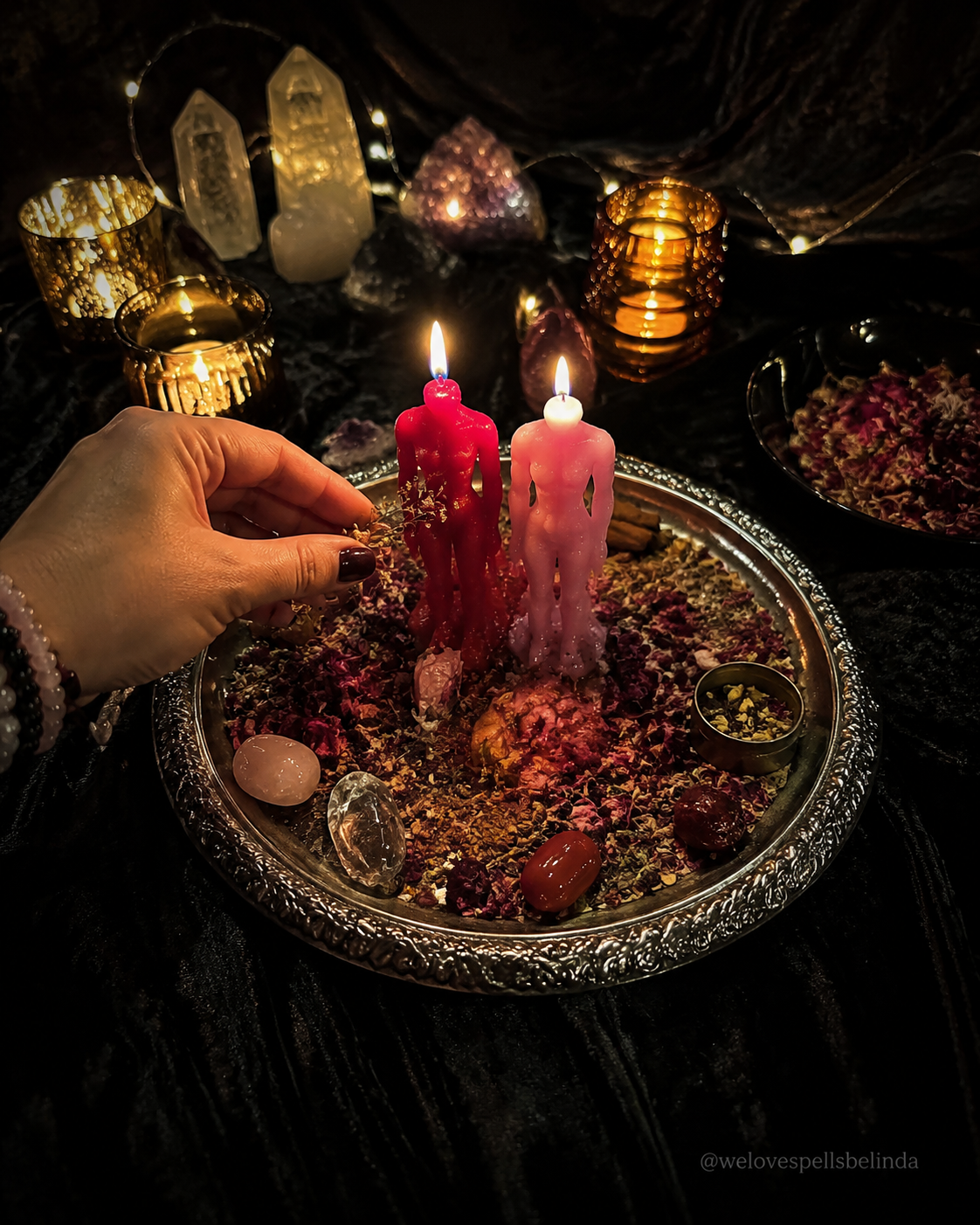
A commitment-focused ritual represents conscious intention, emotional reflection, and openness to mutual love.
What Does a Love Commitment Ritual Mean?
Commitment is more than a label or ceremony. It can involve reliability, emotional presence, fidelity to shared agreements, and a willingness to face challenges together. A ritual creates a deliberate pause in which you can consider whether these qualities are present—or whether you are mainly holding on to what you hope the relationship could become.
Spiritually, commitment work may symbolize the desire to nurture an existing bond and move forward with sincerity. Personally, it may give you a structured way to name your values rather than remaining caught in uncertainty.
Is a commitment ritual the same as a marriage ritual?
Not necessarily. Marriage may be one expression of commitment, but people define devotion differently. Some want an engagement, while others want emotional consistency, exclusivity, long-term planning, or renewed dedication within an established partnership.
The intention should therefore be specific enough to feel meaningful but open enough to respect both people’s agency. Instead of focusing only on “I want this person to propose,” you might reflect on “I welcome a relationship in which commitment is discussed honestly and chosen freely.”
Can a ritual strengthen an existing relationship?
A ritual may support your spiritual focus, but the relationship itself is strengthened through mutual action. Listening, accountability, affection, repaired trust, and dependable behavior give commitment practical substance.
If there has been emotional distance or unresolved conflict, a service focused on relationship healing and reflection may feel more aligned than immediately concentrating on engagement or marriage. Choosing the intention that reflects your present circumstances is often more grounded than rushing toward the final milestone.
Why You May Feel Drawn to Commitment-Focused Ritual Work
You may be considering spiritual support because the relationship feels loving but undefined. Perhaps you and your partner have been together for a long time, have discussed the future only vaguely, or are rebuilding after a difficult period.
Common reasons people seek commitment-focused reflection include:
- Wanting clarity about a relationship’s direction
- Preparing to discuss engagement, marriage, or exclusivity
- Hoping to deepen an already mutual and caring bond
- Working through fear around vulnerability or long-term partnership
- Reconnecting with personal standards after accepting uncertainty
- Creating a spiritual marker for a new stage of shared life
These feelings are understandable. Still, emotional urgency can make it difficult to distinguish intuition from anxiety. Before choosing any ritual, ask yourself: If this relationship stayed exactly as it is today, would I feel respected, secure, and able to speak honestly?
Your answer can reveal whether you are nurturing a healthy connection or hoping that commitment will solve deeper problems. A title, promise, or ceremony rarely repairs a pattern that neither person is willing to address.
Intention, Symbolism, and Emotional Grounding
Intention gives spiritual reflection direction. It identifies the quality you wish to invite or strengthen, such as honesty, tenderness, stability, courage, or mutual readiness. The most balanced intentions focus on the kind of relationship you want to participate in—not on controlling a particular decision.
Symbolism can help make an inward commitment feel tangible. The symbolic act is not a substitute for action; rather, it can remind you of what you have chosen to value. Emotional grounding then helps you approach the subject without allowing fear to dominate the conversation.
How should you set an ethical commitment intention?
A grounded intention recognizes that both people matter. It makes space for a meaningful “yes,” an honest “not yet,” or even the realization that your paths are different.
Consider using this five-step reflection before seeking ritual support:
- Name the deeper desire. Look beneath the proposal, label, or ceremony. Do you want security, recognition, partnership, family, or consistency?
- Separate facts from hopes. Write down what your partner has actually said and done, then list what you have assumed or imagined.
- Identify your values. Define the behaviors that commitment must include for you, such as honesty, mutual effort, or shared planning.
- Respect freedom of choice. Frame your intention around openness, clarity, and mutual alignment rather than a required response.
- Choose one practical action. Plan a calm conversation, state a boundary, or ask a direct question about the future.
You might write an intention such as: “I welcome clarity, honest communication, and a commitment that is mutual, healthy, and freely chosen.” This leaves room for spiritual meaning while keeping you anchored in dignity and reality.
What if communication is the main obstacle?
If conversations are inconsistent or difficult to begin, focus first on creating conditions for respectful dialogue. The aim is not to obtain a particular answer but to make honest expression possible.
You may wish to explore a private communication-focused ritual service as symbolic support. Even then, it remains important to avoid repeatedly contacting someone who has requested space and to recognize that spiritual work cannot require another person to respond.
Practical Actions That Complement Spiritual Reflection
A meaningful ritual intention becomes more useful when paired with real-world behavior. If you want a secure partnership, your communication should make room for truth rather than testing, guessing, or hinting.
Plan a calm commitment conversation
Choose a neutral moment when neither person is distracted or already upset. Speak from your own perspective and make your question clear. For example: “I care about our relationship, and long-term commitment matters to me. How do you see our future developing?”
Then listen to both the words and the level of engagement. A partner may need time to reflect, but repeated avoidance is also information. Clarity includes noticing whether actions consistently match reassuring statements.
Discuss what commitment looks like in daily life
Two people can use the word “commitment” while imagining very different arrangements. Consider discussing:
- Exclusivity and relationship boundaries
- Expectations around communication and emotional support
- Living arrangements and practical responsibilities
- Marriage, family, or other long-term goals
- How conflict, trust, and repair will be handled
- How each person preserves individuality within the relationship
If both partners already share a loving foundation and want to deepen it, you may gently explore the Growing in Love ritual service. Let such support complement—not replace—the everyday care that creates a dependable bond.
Realistic Expectations and Personal Choice
Spiritual ritual can be meaningful, comforting, or clarifying, but experiences and results vary. No ritual can guarantee an engagement, marriage, message, reconciliation, or lasting relationship. Another person remains responsible for their own feelings, decisions, and behavior.
It is also helpful to avoid setting an exact deadline for a desired result. Waiting for a specific sign can intensify anxiety and lead you to interpret every interaction as evidence. Instead, observe the relationship as a whole: Is communication becoming more open? Are you expressing your needs? Does the connection feel reciprocal?
If your central need is truth rather than immediate commitment, a truth and clarity in love service may be a more fitting area to consider. The goal of reflection should include your own readiness to see the situation honestly, even when the answer differs from your original hope.
Ethical Considerations in Commitment Rituals
Ethical spiritual work respects autonomy. A loving intention does not remove another person’s right to hesitate, decline, change direction, or define commitment differently. It should never be used to excuse pressure, surveillance, repeated unwanted contact, or disregard for boundaries.
It is especially important to pause if the relationship includes persistent dishonesty, contempt, intimidation, or a repeated refusal to communicate. A commitment ritual is not a solution to unsafe or deeply harmful behavior. Your well-being and freedom of choice matter just as much as the continuation of the relationship.
Sometimes the most empowering intention is not “keep this relationship at any cost,” but “help me recognize what is mutual and release what asks me to abandon myself.” If emotional separation is the healthier direction, cord-cutting spiritual support is available as a reflection-centered alternative.
What to Consider Before Choosing This Support
Before ordering a private ritual service, take time to identify what you are truly seeking. Commitment-focused work may feel relevant when affection and mutual interest already exist, but you want spiritual support while approaching the next stage thoughtfully.
Consider the following questions:
- Have we openly discussed what commitment means to each of us?
- Is my intention based on mutual connection or fear of losing control?
- Am I willing to respect an answer I did not hope to receive?
- Does this relationship demonstrate care through consistent actions?
- Would healing, communication, or personal clarity be a more honest focus?
- Can I approach ritual support without expecting a guaranteed outcome?
There is no need to choose the most dramatic intention. The most relevant support is the one that reflects the relationship as it currently exists. If you feel ready to compare options, you can visit We Love Spells and consider which form of private spiritual support best matches your values and circumstances.
How Private Online Ritual Support Works
We Love Spells provides private online spiritual and ritual services. After ordering, clients provide relevant personal details so the work can be personalized. Belinda personally performs the ritual work and sends the client a private update after casting.
Remote rituals are performed privately, and no physical item is shipped for a remote ritual service. This means the service is the private ritual work itself rather than a package delivered to your home.
Spiritual experiences and results vary, and We Love Spells does not guarantee a particular outcome. Private ritual support is best approached as a personal spiritual choice that can accompany reflection, communication, and responsible action.
Frequently Asked Questions
Can a love commitment ritual make someone propose?
No ritual can guarantee or compel a proposal. A proposal should come from genuine readiness and free choice. Commitment work is more appropriately used to focus your intentions and support honest reflection about the relationship.
What should my intention be for a commitment ritual?
Focus on mutual qualities such as honesty, emotional availability, shared direction, and freely chosen devotion. Avoid framing the intention as control over a particular person or decision.
Can I use this kind of ritual for an existing marriage?
Yes, commitment-focused reflection can center on renewing dedication within an existing marriage. Practical conversations about affection, expectations, trust, and unresolved concerns should accompany the spiritual intention.
What if my partner is uncertain about the future?
Allow room for an honest answer and ask what is creating the uncertainty. You can express your needs clearly, but you cannot make another person become ready. Consider whether their present level of commitment meets your needs.
How long does a commitment ritual take to show results?
There is no exact or guaranteed timeline. Spiritual experiences vary, and it is healthier to avoid placing your life on hold while waiting for a sign. Continue evaluating communication, compatibility, and observable behavior.
Is ritual support a replacement for talking to my partner?
No. A ritual may support reflection and emotional grounding, but direct, respectful communication remains essential. Shared commitment is built through choices both people understand and willingly make.
Moving Forward With Clarity and Care
A love commitment ritual can mark a sincere desire for a more stable, loving, and openly defined relationship. Its deepest value lies not in controlling the future, but in helping you clarify what you want, communicate with courage, and remain receptive to the truth of the connection.
You deserve a commitment that is not extracted through pressure or sustained by uncertainty. Let your spiritual intention honor mutual choice, and let your practical actions reflect the honesty and care you hope to receive.
If this approach feels aligned, you are welcome to explore the private marriage commitment ritual when you feel ready. Approach it as supportive spiritual work alongside open communication, grounded expectations, and respect for everyone involved.