

Love Commitment Ritual: A Guide to Intentional Partnership
Have you reached a point in your relationship where love is present, yet the path forward still feels uncertain? Wanting deeper commitment can bring hope, tenderness, and vulnerability all at once—especially when you are trying to honor both your needs and your partner’s freedom to choose.
A love commitment ritual is a spiritual practice centered on intentional partnership, mutual respect, and clarity about the relationship you wish to build. It cannot make decisions for another person or replace an honest conversation. Instead, it can create a meaningful space for reflection while you consider whether your values, actions, and hopes are aligned.
This guide explains what commitment-focused ritual work means, why people seek it, how to set an ethical intention, and which practical relationship steps can support your spiritual reflection. If you are already considering private assistance, you can also explore the marriage commitment ritual service offered by We Love Spells.
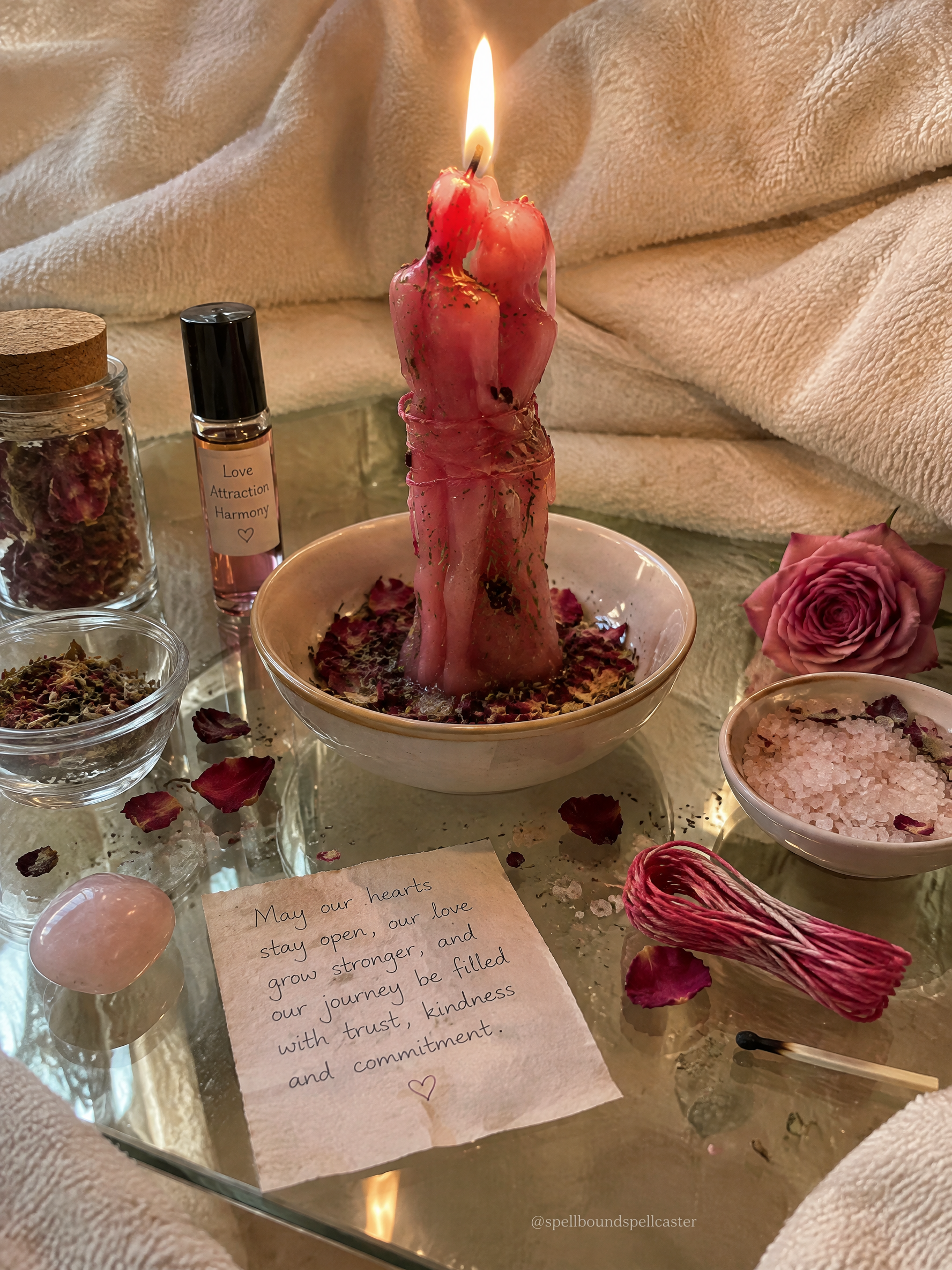
Commitment-centered spiritual reflection can help you approach partnership with clarity, patience, and respect for mutual choice.
What Is a Love Commitment Ritual?
In plain language, a love commitment ritual is a symbolic spiritual practice focused on the qualities that help a relationship become more secure and purposeful. Those qualities may include honesty, consistency, affection, shared responsibility, emotional openness, or readiness for a more defined partnership.
The ritual is best understood as a container for intention—not a tool for controlling someone’s emotions or overriding their boundaries. Its purpose is to help you name what commitment means to you, focus on the relationship qualities you value, and remain grounded as real-life choices unfold.
Is a commitment ritual the same as a marriage ritual?
Not necessarily. Commitment can mean becoming exclusive, creating a shared future, strengthening an existing marriage, or simply relating with greater reliability. A marriage-focused intention is more specific, while a broader commitment intention may be appropriate for partners who are not pursuing marriage.
The important question is not which label sounds most powerful. It is whether the intention reflects the relationship’s present reality and leaves room for honest, mutual participation.
Can a ritual make someone commit?
No spiritual service should be treated as a way to force a person to propose, stay, communicate, or make a decision. Every person retains agency. Spiritual experiences and results vary, and We Love Spells does not guarantee a particular outcome.
A healthier focus is to seek clarity, reciprocal care, and conditions in which authentic commitment can be recognized. This keeps your intention centered on partnership rather than control.
Why You May Feel Drawn to Commitment-Focused Spiritual Support
You may feel drawn to ritual because the relationship matters deeply and ordinary words do not fully express the emotional significance of this moment. A symbolic act can mark a transition, help you gather scattered thoughts, or give form to a hope you have carried quietly.
Common reasons people consider this kind of support include:
- Wanting to understand whether a relationship has a shared direction.
- Hoping to strengthen an established partnership through more deliberate care.
- Preparing for a respectful conversation about exclusivity, engagement, or marriage.
- Seeking emotional steadiness while navigating uncertainty.
- Reconnecting with personal values after tension or distance.
- Creating a symbolic acknowledgment of promises already made mutually.
None of these feelings make you needy or unreasonable. The desire for security is human. At the same time, spiritual reflection is most constructive when it helps you face reality compassionately rather than avoid information that may be difficult to hear.
Reflection question: If you set aside the outcome you hope for, what patterns in this relationship currently show mutual readiness, care, and responsibility?
Intention, Symbolism, and Emotional Grounding
Rituals often feel meaningful because symbols can express what everyday language cannot. In commitment work, symbolism may represent steadiness, unity, truth, growth, or the decision to treat love as an ongoing practice.
However, symbolism has the most value when it is paired with emotional grounding. Being grounded means noticing what you feel without allowing fear, fantasy, or urgency to make every decision for you. It also means distinguishing between what you can influence—your communication, standards, and conduct—and what belongs to someone else.
How do you set an ethical relationship intention?
An ethical intention describes the quality of connection you welcome without dictating another person’s thoughts or behavior. It respects consent and allows the relationship’s truth to become clearer.
For example, instead of focusing on “making” a particular person take a specific action, you might choose an intention such as: May this partnership develop through mutual honesty, freely chosen commitment, and care that is demonstrated consistently.
If truth and transparency are the heart of your concern, the honesty-focused ritual service may be more aligned than a commitment-specific service. Choosing support by the underlying need can help you avoid using ritual as a substitute for clarity.
A five-step commitment reflection exercise
You can use this private exercise before choosing any spiritual service:
- Name your intention. Write one sentence describing the kind of partnership you wish to experience, using words such as mutual, respectful, honest, or freely chosen.
- Separate hopes from facts. List what you hope will happen, then list what your partner has actually communicated and demonstrated.
- Identify your values. Choose three qualities that commitment must include for you, such as reliability, emotional safety, shared planning, or faithfulness.
- Notice your boundaries. Consider what you will and will not accept while waiting for greater clarity.
- Choose one grounded action. Plan a calm conversation, make a reasonable request, or give yourself time to observe consistent behavior.
This process does not require you to suppress hope. It simply allows hope to sit beside discernment.
Spiritual Reflection and Practical Relationship Action
A ritual can be emotionally significant, but partnership is built through repeated choices. Commitment becomes visible when words and conduct agree over time. That is why practical action should complement, rather than be replaced by, spiritual support.
Helpful actions may include:
- Asking what commitment means to each of you rather than assuming you share a definition.
- Discussing expectations around communication, exclusivity, finances, family, or future plans as relevant.
- Making requests directly instead of testing your partner or expecting them to guess.
- Watching for consistency between promises and everyday behavior.
- Respecting a clear answer, even when it differs from the answer you wanted.
- Maintaining friendships, routines, and personal goals outside the relationship.
If your bond already feels caring but needs room to mature, you may wish to gently explore the Growing in Love ritual. For relationships carrying unresolved strain, the relationship healing ritual may offer a more fitting focus. Neither option replaces communication or guarantees change.
What if you are in a long-distance relationship?
Distance can make commitment questions feel especially intense because daily reassurance may be limited. Clear agreements about communication, visits, exclusivity, and future logistics become important. Vague promises may feel comforting temporarily, but specific and realistic discussions provide better information.
Those seeking a spiritual focus specifically suited to distance can consider the long-distance bond support service. Approach it as a companion to mutual effort, not as proof that the relationship must follow a predetermined path.
Realistic Expectations for a Love Commitment Ritual
A ritual may help you feel more deliberate, reflective, or emotionally centered. It may also prompt you to recognize what you genuinely want from partnership. Your experience may be subtle, personal, or different from what you initially expected.
It is not realistic to view ritual work as a guaranteed proposal, marriage, message, reconciliation, or personality change. It also cannot establish compatibility where core values or goals are fundamentally different.
Rather than monitoring every interaction for a “sign,” return to observable relationship health. Are both people communicating? Are agreements respected? Can you discuss difficult subjects without threats or punishment? Does affection coexist with accountability?
Uncertainty can tempt you to purchase multiple forms of support impulsively. Give yourself permission to pause. One carefully considered intention is often more emotionally grounded than repeatedly seeking reassurance whenever anxiety rises.
Ethics, Consent, and Personal Choice
Ethical commitment work honors the dignity of everyone involved. It does not frame another person as a prize to be secured or a will to be overcome. Love remains meaningful because it includes choice.
This principle applies even when you feel certain that a relationship is meant to deepen. Your conviction does not replace the other person’s consent, and their uncertainty does not reduce your worth. You can welcome mutual partnership while remaining open to truthful information.
What if your partner is not ready?
Listen to what “not ready” means in practice. It may describe a temporary and clearly communicated circumstance, or it may signal a lasting difference in relationship goals. You do not need to pressure someone, but you also do not have to wait indefinitely without clarity.
A respectful response can include asking what readiness would involve, whether there is a shared direction, and what each person considers a reasonable next step. You can then decide whether the available relationship aligns with your needs.
What if the relationship needs affection rather than commitment?
Sometimes the label is not the central issue. A couple may already be committed but feel emotionally disconnected, unappreciated, or caught in routine. In that case, an intention centered on warmth may be more accurate.
You can compare that distinction with the More Affection ritual service. A carefully chosen focus should reflect the relationship’s actual need rather than the most dramatic possible outcome.
What to Consider Before Choosing This Support
Before ordering a private ritual, take a quiet moment to consider your motivation and expectations. A service should feel like a conscious choice, not an emergency response to fear or silence.
- Your true goal: Are you seeking mutual commitment, emotional reassurance, relationship repair, or clarity?
- Current evidence: Has your partner shown care, accountability, and willingness to discuss the future?
- Consent and autonomy: Does your intention leave room for both people to make genuine choices?
- Practical participation: Are you willing to communicate clearly and act in accordance with your values?
- Emotional readiness: Can you accept that spiritual experiences vary and that no particular outcome is guaranteed?
- Service fit: Does the ritual’s focus accurately match your circumstances?
If your relationship is moving toward engagement through mutual discussion, the engagement-focused ritual is another relevant option to consider. Explore only when it feels aligned, and avoid treating a ritual as a replacement for an explicit conversation about marriage.
How Private Online Ritual Support Works
We Love Spells provides private online spiritual and ritual services. After ordering, clients provide relevant personal details so the work can be personalized. Belinda personally performs the ritual work, and clients receive a private update after casting.
Remote rituals are performed privately, so no physical item is shipped for a remote ritual service. This format may suit someone who wants personal spiritual support without receiving ritual materials at home.
The service should be approached with realistic expectations. Spiritual experiences and results vary, and We Love Spells does not guarantee a particular outcome. The ritual can accompany your intention and reflection, while real-world relationship decisions remain with the people involved.
Frequently Asked Questions
What should my intention be for a love commitment ritual?
Center it on qualities such as mutual devotion, honesty, stability, and freely chosen partnership. Avoid wording that demands a specific person act against their preferences or boundaries.
Do I need to be married or engaged?
No. Commitment reflection can be relevant to dating, exclusive relationships, engagements, and marriages. The intention should match the relationship’s actual stage.
Can ritual work replace a commitment conversation?
No. A direct, respectful conversation remains important. Ritual may support reflection or emotional grounding, but it cannot communicate your needs for you.
How will I know whether the relationship is becoming more committed?
Look for consistent behavior: honest communication, kept agreements, shared planning, respectful conflict, and mutual effort. Avoid relying solely on coincidences or interpreting every event as a sign.
Is a commitment ritual appropriate after relationship conflict?
It may be meaningful if both people are still participating respectfully, but the underlying conflict should not be ignored. If repair, accountability, or forgiveness is the primary need, choose an intention that reflects that reality.
Are results guaranteed?
No. Spiritual experiences and results vary, and We Love Spells does not guarantee any particular outcome. Another person’s emotions, choices, and behavior cannot ethically be promised.
Choosing Commitment With Clarity and Care
A love commitment ritual can mark a sincere desire to build a relationship based on truth, steadiness, and mutual care. Its deepest value lies not in trying to secure another person, but in helping you become clear about the partnership you are willing to create and receive.
Let spiritual reflection stand beside honest communication, observable effort, and respect for personal choice. Whatever unfolds, your needs and boundaries deserve compassionate attention—not pressure, fear, or false certainty.
When you feel ready to explore private support for an intentional partnership, you may review the Powerful Marriage Commitment service. Take your time, consider whether its focus fits your situation, and choose only from a place of grounded hope.