

Exploring Alnwick’s Poison Garden: Britain’s Deadly Botanical Wonder
Alnwick’s Poison Garden at a Glance
- Alnwick’s Poison Garden is a guided-only botanical attraction in Northumberland, England, featuring more than 100 toxic, narcotic, and deadly plants.
- The garden sits within the grounds of Alnwick Castle and was inspired by historic poison gardens, including the infamous Medici gardens of Italy.
- Visitors are instructed not to touch, taste, or smell the plants because some species can cause serious reactions.
- Beyond its danger, the garden offers a powerful lesson in transformation: the same natural forces that can harm may also heal when handled responsibly.
- For spiritually sensitive readers, this hidden world of poison, protection, and renewal mirrors the emotional journey of love, heartbreak, cleansing, and personal growth.
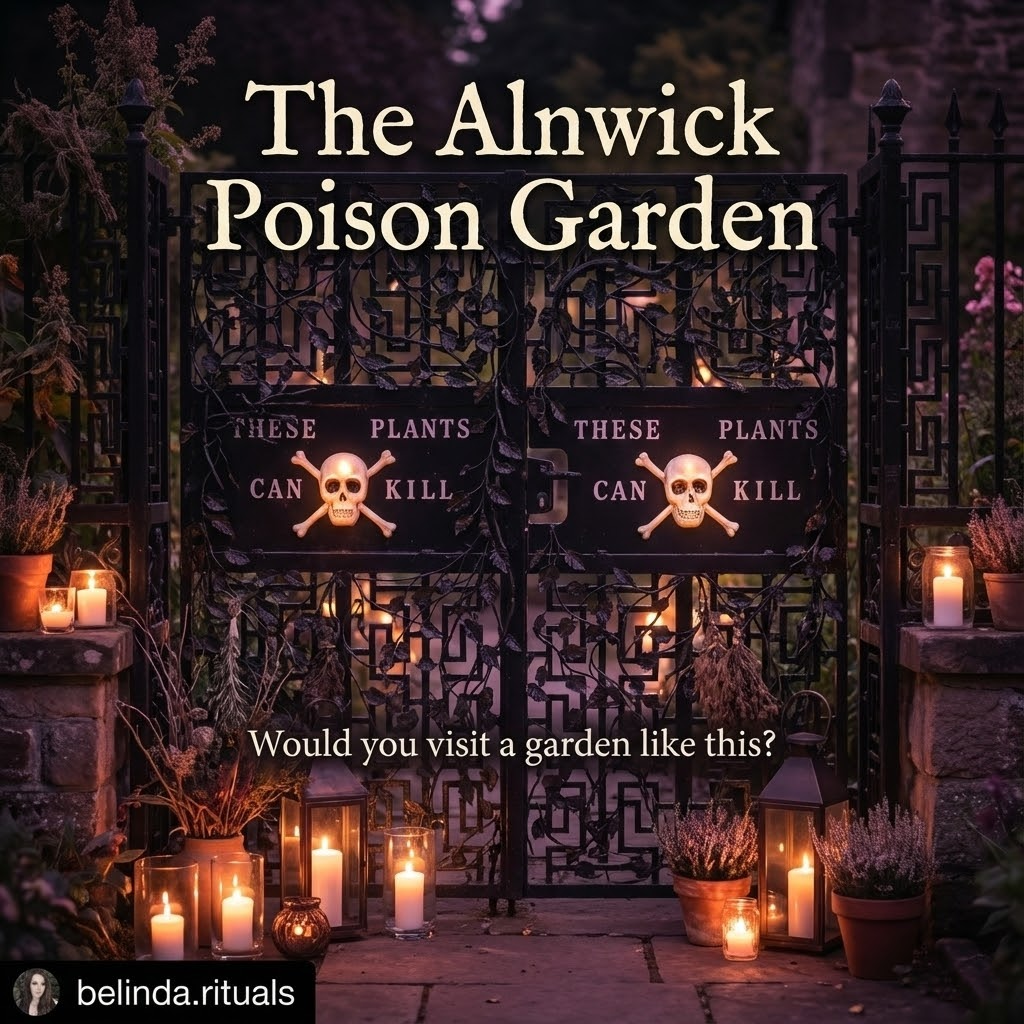
The guarded entrance to Alnwick’s Poison Garden reminds visitors that beauty and danger can grow side by side.
Have you ever imagined standing in a garden so dangerous that visitors are forbidden to touch, taste, or even sniff the flowers? At Alnwick’s Poison Garden in Northumberland, England, that warning is not theatrical. It is essential.
This is not an ordinary botanical walk filled only with roses, lavender, and soft green lawns. Behind its black iron gates grows a carefully controlled collection of plants known for poison, medicine, folklore, intoxication, and death. It is haunting, educational, and strangely beautiful.
For many people, the garden’s deeper message is emotional as much as botanical: nature teaches us that power must be respected. The same is true of love, desire, grief, and spiritual healing. What feels intense or forbidden can become wisdom when approached carefully, ethically, and with the right guidance.
What Makes Alnwick’s Poison Garden So Extraordinary?
Tucked inside the grand grounds of Alnwick Castle, the Poison Garden is one of Britain’s most unusual horticultural attractions. It contains over 100 species of toxic, narcotic, medicinal, and potentially deadly plants.
The plants are not presented casually. They are kept behind barriers, monitored carefully, and explained only through guided tours. Visitors enter with a clear understanding that this is a place of learning, not touching.
What makes the garden unforgettable is the tension between appearance and danger. Some flowers look delicate. Some leaves appear harmless. Yet many of these plants carry centuries of stories involving healers, witches, physicians, poisoners, emperors, and everyday people who underestimated them.
The garden’s deadly plants are presented with strict safety controls and rich historical context.
From Fairytale Grounds to Fatal Flora
The idea for this lethal garden came from Duchess Jane Percy in the late 1990s. Inspired by Italy’s ancient poison gardens, especially the Medici gardens, she wanted to create something different from a traditional ornamental display.
Instead of focusing only on soothing scents and pretty petals, she built a space that explores the darker power of nature. The result is both thrilling and educational: a living museum of toxic plants, ancient medicine, folklore, and human curiosity.
Why a Poison Garden Matters
Alnwick’s Poison Garden is more than a tourist attraction. It helps visitors understand the delicate line between healing and harm. Many feared plants have also contributed to medicine, ritual, myth, and cultural history. The lesson is simple but powerful: knowledge creates respect.
Famous Deadly Plants Inside the Garden
Each plant in the Poison Garden has its own chilling story. Some are connected to medicine, some to crime, and others to ancient magical traditions. Here are a few of the most notorious residents behind the gates:
- Belladonna, also called Deadly Nightshade: Historically linked to beauty rituals because it could dilate the pupils, but it is highly toxic and dangerous.
- Hemlock: Famous as the plant associated with the death of philosopher Socrates, and a symbol of knowledge, power, and irreversible consequence.
- Foxglove: Known for compounds that affect the heart. In controlled medical contexts, derivatives have been used to treat heart conditions, but the plant itself is dangerous.
- Oleander: A visually beautiful plant with pink or white blooms, yet every part of it contains potent cardiac toxins.
- Angel’s Trumpet: Ethereal and dramatic in appearance, but associated with dangerous hallucinogenic and toxic effects.
What fascinates visitors is not just that these plants can harm. It is that many of them sit at the intersection of medicine, myth, temptation, and warning. The garden makes that balance visible.
Why People Are Drawn to Deadly Beauty
Why would anyone want to visit a garden filled with poisonous plants? Because human beings have always been drawn to the forbidden. We want to understand what frightens us. We want to name the danger, study it, and learn from it.
The same emotional pattern appears in love and relationships. Attraction can feel intoxicating. Heartbreak can feel poisonous. A connection may be beautiful and painful at the same time.
That is why places like Alnwick’s Poison Garden speak so strongly to people who are drawn to spiritual symbolism. They remind us that transformation is rarely simple. Healing often begins when we stop pretending the shadows are not there.
Lessons Hidden Among the Thorns
Walking through the Poison Garden teaches more than plant identification. It becomes a living metaphor for dual energy: creation and destruction, attraction and caution, longing and release.
Many visitors describe the experience as spiritual as well as scientific. The guided stories echo ancient wisdom: a plant may hold both a cure and a curse. In the same way, an emotional bond may carry both beauty and pain.
If you are moving through a complicated love situation, the garden’s symbolism may feel familiar. Sometimes the heart knows something is powerful, but the spirit still needs clarity, protection, and time.
When Love Feels Like a Garden of Thorns
If your relationship feels tangled, uncertain, or emotionally heavy, gentle spiritual support may help you focus your intention and seek peace. For couples hoping to soften conflict and rebuild emotional connection, the Reconciliation Love Spell may be a meaningful option to explore.
Spiritual work is deeply personal, and results may vary. It should never replace honest communication, safety, or professional support where needed.
How to Visit Alnwick’s Poison Garden Safely
If you plan to visit, go with a respectful mindset. The garden is designed to be fascinating, but it is also designed around strict safety rules.
- Book or join a guided tour. The Poison Garden is not open for unsupervised wandering because of the risk involved.
- Do not touch, taste, or smell the plants. Some species can cause dizziness, skin reactions, illness, or worse.
- Stay on the marked path. Barriers and fencing are there to protect visitors as well as the plants.
- Listen carefully to your guide. Guides share safety instructions along with historical, medical, and mythological context.
- Consider visiting in spring or summer. The wider Alnwick gardens are especially lush, and guided stories feel even more vivid when the plants are in bloom.
For a fuller experience, combine the Poison Garden with the wider Alnwick Castle gardens and nearby attractions. The contrast between ordinary beauty and dangerous botany is part of what makes the destination so memorable.
The Role of Guides and Security in the Poison Garden
The guided tour is not only a safety measure. It is the heart of the experience. Trained experts, botanists, and horticultural staff explain each plant’s background, including historical uses, medicinal properties, toxic effects, and symbolic meanings.
Security is also taken seriously. The most dangerous plants are fenced or clearly separated, pathways are marked, and staff are trained to respond to incidents. The result is a carefully managed attraction where curiosity is encouraged, but recklessness is not.
This clear boundary is part of the garden’s wisdom. Power does not need to be feared blindly, but it must be respected.
Historical Inspiration: The Medici Poison Gardens
Alnwick’s Poison Garden was inspired in part by the ancient poison gardens of Italy, especially those associated with the Medici family. During the Renaissance, powerful households and medical minds explored plants for both healing and darker purposes.
These gardens reflected the dual nature of botany. A plant could be a medicine in one dose and a poison in another. A root could become a remedy, a weapon, or a ritual ingredient depending on who held it and why.
Understanding this history gives modern visitors a deeper appreciation for Alnwick’s design. It is not simply a display of dangerous plants. It is a tribute to humanity’s long, complicated relationship with natural power.
How Deadly Plants Contributed to Modern Medicine
One of the most surprising lessons of the Poison Garden is that danger and healing can come from the same source. Many toxic plants have contributed to modern medicine when studied, extracted, and controlled by professionals.
- Foxglove: The source of digitalis-related compounds used in heart medicine under controlled medical conditions.
- Belladonna: Historically used in carefully measured medical applications, including muscle relaxation and eye-related procedures.
- Opium poppy: The botanical origin of morphine, a powerful pain-relieving medicine with serious risks and strict regulation.
This does not mean these plants are safe to handle or experiment with. It means they illustrate the importance of expertise, boundaries, and respect. In medicine, spirituality, and love, intention alone is not enough. Care matters.
Poison, Power, and Spiritual Transformation
In folklore and alchemy, poison often symbolizes transformation. It can represent the painful thing that forces change, the shadow that must be faced, or the intense experience that eventually becomes wisdom.
This is why the Poison Garden resonates with people who are drawn to emotional healing and spiritual work. It reminds us that not everything painful is meaningless. Some experiences invite cleansing, protection, release, or renewal.
At We Love Spells, spiritual support is handled privately and with care. This is a private online spell casting service, which means no physical item is shipped. After ordering, the client sends personal details so the ritual can be focused and personalized. Belinda personally performs the ritual work and then sends a private update after casting.
There are no false promises or guaranteed outcomes. Spiritual work is personal, and results may vary. The purpose is to offer focused energetic support, emotional clarity, and a meaningful ritual process for those who feel guided to seek it.
Featured Spiritual Support
If the symbolism of renewal, attraction, and emotional transformation speaks to you, you may feel drawn to explore a private love-focused ritual.
Bringing the Garden’s Wisdom Into Your Own Life
You do not need to stand inside Alnwick’s iron gates to learn from its message. The Poison Garden teaches a form of emotional alchemy: take what is painful, name it honestly, and transform it with care.
- Respect duality. People, relationships, and emotions can carry both light and shadow.
- Move slowly around intensity. Passion can be meaningful, but it should never require abandoning your peace.
- Cleanse what feels toxic. Notice patterns that leave you drained, confused, or disconnected from yourself.
- Seek support when needed. Spiritual guidance, trusted friends, counseling, and honest reflection can all have a place.
- Choose transformation over obsession. The goal is not to force life, but to align your energy with healing, clarity, and love.
Special Events, Workshops, and Plant Education
Throughout the year, Alnwick’s Poison Garden and the wider Alnwick Garden experience may offer special events or educational programming. These can include deeper discussions of toxicology, herbal history, chemistry, safety, and botanical folklore.
Workshops and guided sessions may explore plant identification, the ethics of herbal use, and the cultural myths surrounding poisonous plants. For plant lovers, occult history enthusiasts, and curious travelers, these events can add another layer of meaning to the visit.
Need Gentle Guidance Before Choosing a Ritual?
If you are unsure what kind of spiritual support fits your situation, you may prefer a private reading or intuitive guidance before ordering. This can help you slow down, reflect, and choose from a calmer place.
Additional Resources for Plant Enthusiasts
If Alnwick’s Poison Garden inspires you to learn more about toxic plants, herbal history, and safe gardening practices, these resources are helpful starting points:
- Botanical.com - A broad reference source for traditional botanical information and plant history.
- The Poison Garden Website - A dedicated resource for poison garden information and toxic plant stories.
- Royal Horticultural Society - Expert guidance on gardening, plant safety, and horticultural best practices.
Always handle plant knowledge responsibly. Never ingest, prepare, or experiment with toxic plants without qualified professional guidance.
What Clients Appreciate About Private Online Spell Casting
Many people who come to We Love Spells are not looking for pressure or dramatic promises. They are often seeking quiet support, emotional focus, and a ritual performed privately by someone experienced.
The process is simple: choose the ritual that feels aligned, place your order, send the details requested for personalization, and allow Belinda to perform the work privately. Since the spell is cast remotely, no physical product is shipped. After the ritual, you receive a private spell casting update.
⭐⭐⭐⭐⭐
“I liked that everything was private and online. Belinda’s update after the casting helped me feel calmer and more centered about my situation.”
- M., private client
⭐⭐⭐⭐⭐
“No one promised me miracles, which I appreciated. The process felt respectful, personal, and emotionally supportive.”
- Sara L.
⭐⭐⭐⭐⭐
“I was nervous at first, but the instructions were clear. I sent my details after ordering and received a thoughtful update once the ritual was completed.”
- A.R.
Explore Love, Healing, and Transformation
Alnwick’s Poison Garden reminds us that not all beauty is harmless, and not all danger is evil. The deeper lesson is balance. A plant can be poison in one context and medicine in another. A heartbreak can feel devastating, yet still become the beginning of self-knowledge.
If your heart is still holding on, or if you feel guided to seek spiritual support with love, reconciliation, attraction, or emotional clarity, you can browse the private options in the Love Spells collection.
Browse Private Love Spell Casting Options
Each ritual is cast remotely and privately. After ordering, you will be asked to send the details needed to personalize your work.
A Warm Invitation When You Feel Ready
If the symbolism of Alnwick’s Poison Garden speaks to your own love journey, you do not have to move through uncertainty alone. We Love Spells offers private online spell casting for those seeking focused spiritual support, emotional clarity, and relationship-centered ritual work.
Belinda casts the work personally and privately. No physical item is shipped. After ordering, you send your details so the ritual can be personalized, and you receive a private update after casting.
Spiritual work is personal, and results may vary. There are no guaranteed outcomes, only sincere ritual work performed with care, discretion, and respect for your situation.
Visit the Love Spells CollectionQuestions before ordering? You can reach out through the contact page.
Frequently Asked Questions About Alnwick’s Poison Garden
Where is Alnwick’s Poison Garden located?
Alnwick’s Poison Garden is located within The Alnwick Garden at Alnwick Castle in Northumberland, England.
Can you visit the Poison Garden without a guide?
No. Visitors enter the Poison Garden only as part of a guided tour because many plants are toxic, narcotic, or potentially dangerous.
What plants are in Alnwick’s Poison Garden?
The collection includes plants such as belladonna, hemlock, foxglove, oleander, angel’s trumpet, mandrake, and opium poppy, among many others.
Is Alnwick’s Poison Garden safe for visitors?
Yes, when visitors follow the rules. Safety measures include guided access, barriers, marked paths, and strict instructions not to touch, smell, or taste the plants.
Why is the Poison Garden spiritually symbolic?
The garden symbolizes duality and transformation. Many plants can represent both danger and healing, making the place a powerful reminder of respect, boundaries, and renewal.
Author Guidance
Written with guidance from Spellcaster Belinda, a professional spiritual practitioner with 20+ years of experience helping clients with private love spell casting, reconciliation rituals, emotional clarity work, and relationship-focused spiritual support.